
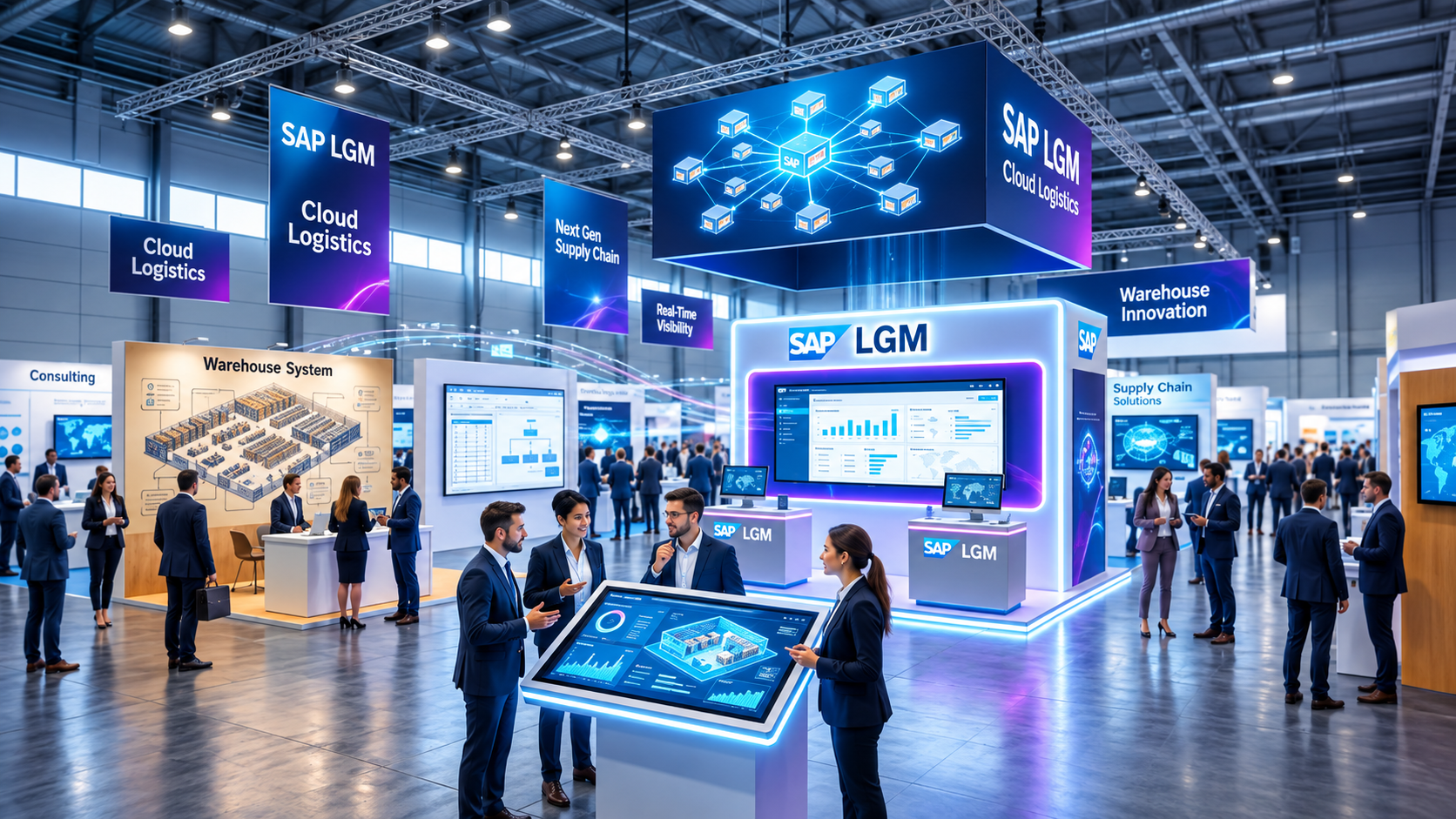
LogiMAT 2026: SAP LGM was everywhere – here's what you need to know now
LogiMAT 2026 had a striking pattern: SAP Logistics Management appeared at what seemed like every other booth of SAP partners and consulting firms. Presentations and live demos dominated the discussions at the trade fair. A solution that has only been officially available since October 2025.
The question is: Why this hype? And what does this mean for companies that are currently rethinking their logistics strategy?
SAP is pushing hard – and the market actually has a need for it.
SAP has declared LGM a strategic priority. This was clearly evident at the trade fair. They had a massive presence in the SAP area, offered co-marketing programs for partners, provided demo tenants for consultants, and aggressively communicated their roadmap.
What's behind it:
SAP needs a cloud-native logistics solution. The on-premise world (SAP WM, LE-TRA) is being phased out. SAP EWM and TM are technically mature, but too complex and expensive for smaller locations. LGM closes precisely this gap – and is simultaneously the lever to attract customers to the cloud ecosystem.
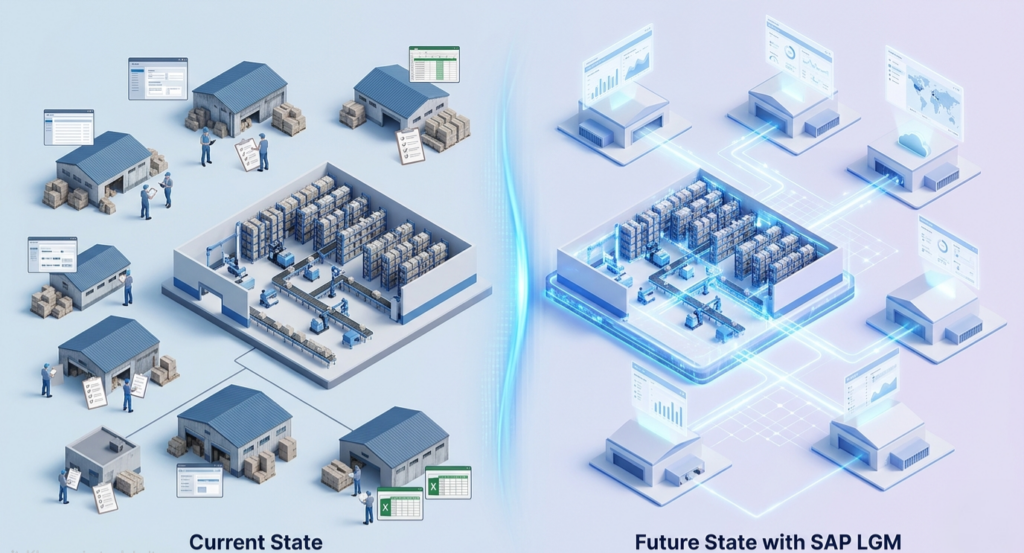
At the same time, this is meeting with real market pressure. Many companies are currently facing the same question: What do we do with our small warehouse locations?
The typical situation:
- Main warehouse operates with SAP EWM
- In addition, there are 5-15 regional locations with manual and outdated processes.
- Migration to S/4HANA is imminent or already underway
- Supply chain strategy is shifting from centralized to distributed networks.
These locations need to be digitized. However, EWM is economically insane for a 500-pallet-space location. Third-party cloud WMS solutions work, but create isolated systems outside the SAP landscape. LGM arrives at precisely this moment. The message: "Native SAP integration, rapid implementation, low TCO, cloud-native." This clearly resonates with many.
Partner perspective: New business area for smaller locations
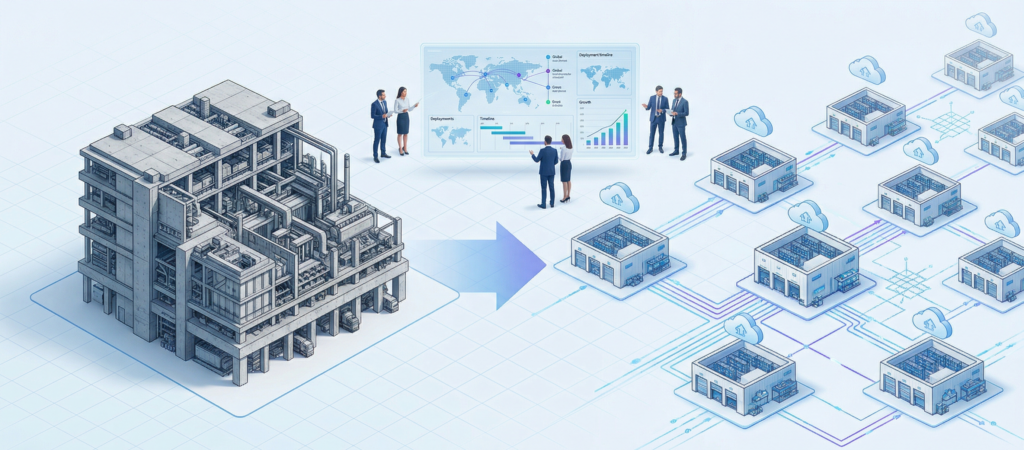
For SAP consultants, LGM is interesting for another reason: Many companies are currently in the midst of S/4HANA transformations. These projects raise the big question: How do we manage our warehouse locations? The main warehouse is equipped with SAP EWM – what about the smaller locations? EWM was usually oversized for these.
LGM opens up new possibilities:
- Rollout at multiple locations per customer
- Faster project cycles
- More projects per year, more predictable resource allocation
- Attractive for consultants: New technology, cloud stack, modern UX
This explains the massive presence at the trade fair. Partners are positioning themselves early to be part of the expected rollout wave. Those who can now showcase reference projects have an advantage.
For SAP partners, this is a clear message: those who don't embrace LGM now will miss out on the next major implementation challenge. Accordingly, consulting firms are investing heavily in building expertise and developing demo environments.
The trade fair was the perfect stage to showcase this expertise.
Practical test: The first implementations
What was particularly interesting were the few booths that presented LGM systems already in production. Not demos, but real customer scenarios.
What works:
- Standard processes are running smoothly
- Mobile apps are accepted by warehouse staff.
- Integration with S/4HANA works out-of-the-box
- Carrier collaboration via business network actually saves time.
Where the problem lies:
- Storage strategies are still limited – currently fixed bin and simple FIFO strategies are still missing.
- Batch management and batch tracking will only be available in Q2/Q3 2026 according to the roadmap.
- Wave management is missing – grouping and optimization of picking orders by priority is not available.
- Mobile goods receipt still limited – expanded mobile functions are coming according to the roadmap for 2026.
Conclusion and Outlook
LGM's massive presence at LogiMAT 2026 is no coincidence. SAP is aggressively pushing its product launch, partners see a new business opportunity, and the market genuinely needs a solution that bridges the gap between Excel and EWM. The combination of the product launch, market pressure, and the anticipated rollout wave explains the hype.
The realistic assessment:
For companies with distributed networks, SAP landscapes, and standardized processes, it's a relevant option. However, the solution is new, its maturity is limited, and many questions remain unanswered.
Those who get on board now are early adopters. This can certainly be an advantage (advantageous experience, close collaboration with SAP, first mover in optimizations). However, it also presents a risk (teething problems, missing features, dependence on the roadmap).
LogiMAT has shown that LGM isn't going anywhere. But whether it becomes the next big thing or remains a niche solution will be decided in the next 12-18 months. Until then: Take a close look, check references, question the roadmap – and don't be blinded by the trade fair hype.

Max Fröhlich, SAP Consultant
Contact & Exchange
A little about me: I'm Max Fröhlich, an SAP EWM consultant. I'm currently focusing intensively on Logistics Management and I particularly appreciate that SAP is now placing such a strong emphasis on user-friendliness.
How do you assess its potential? Feel free to share your thoughts in the comments – I look forward to discussing it.
Leave a Reply